
Why Research Matters for Automatic Tourniquets

Why Research Matters for Automatic Tourniquets
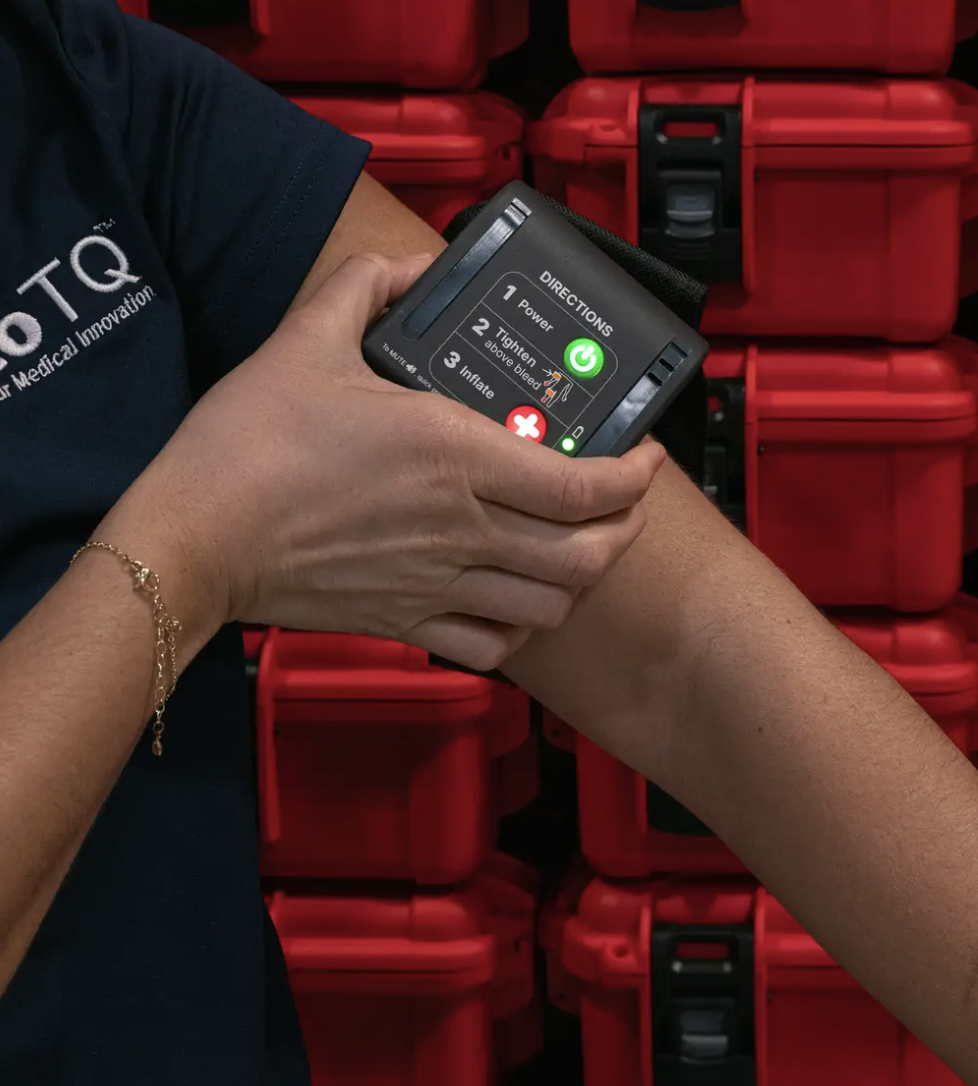
In emergency medicine, innovation alone is not enough. A prototype may look promising in the lab, but the real question is whether it works reliably when someone’s life is on the line.
This is especially true for bleeding control technology. Severe blood loss can become life-threatening in minutes, and rapid hemorrhage control is critical to survival. Blood loss remains the leading cause of preventable death in trauma worldwide, making effective tools for hemorrhage control essential in both professional and civilian settings.
While many companies and innovators can build prototypes, only rigorous testing and published research can demonstrate that a device actually performs as intended.
The Problem: Traditional Tourniquets Often Fail in Real-World Use
Tourniquets have existed for more than 2,000 years and remain the primary method for controlling life-threatening extremity bleeding. However, modern research shows that traditional windlass tourniquets can be difficult for untrained users to apply correctly.
Studies involving hundreds of participants have found that 80–84% of laypeople fail to correctly apply a traditional tourniquet even immediately after training.
Common issues include:
Incorrect placement on the limb
Inadequate tightening or pressure
Slow application during high-stress situations
These failures highlight a critical gap between having a tool available and being able to use it effectively in an emergency.
This challenge is particularly important in public settings such as workplaces, schools, and public venues where bystanders—not medical professionals—are often the first people on scene.
Why Research and Publications Matter
Medical devices should never rely on marketing claims alone. In healthcare and emergency response, credibility comes from evaluation, reproducible testing, and published research.
Published studies help answer key questions such as:
Does the device actually stop arterial blood flow?
Can users apply it correctly?
How quickly can it be deployed in an emergency?
Does the design reduce common failure points?
Published research ensures that claims are evaluated against scientific standards and can be scrutinized by clinicians, engineers, and safety professionals.
For organizations purchasing life-saving equipment, this evidence is essential. Without research, it is impossible to determine whether a device will perform when seconds matter.
Evaluating Automatic Tourniquets Through Research
Automatic tourniquets represent a new category of hemorrhage control technology designed to reduce human error in emergency situations.
Instead of relying solely on manual tightening, these devices may use automated pressure systems, guided instructions, or simplified activation mechanisms to improve reliability and usability.
However, the introduction of new technology raises an important question:
Does automation actually improve performance?
This question can only be answered through structured testing and published results.
The AutoTQ IEEE Publication
Recent research published in IEEE Pulse, titled “Under Pressure: AutoTQ Is Designed for Intuitive, Rapid Hemorrhage Control,” examines the usability and performance of the AutoTQ automated tourniquet.
The study evaluated how first-time users applied the device in a simulated emergency scenario. Participants received only a brief demonstration lasting less than 30 seconds before attempting to apply the tourniquet.
The results were striking:
100% of participants successfully applied the device
92% completed the application autonomously without assistance
The average application time was approximately 15 seconds
These findings suggest that automation and intuitive design may significantly reduce the barriers that often prevent effective hemorrhage control by non-medical users.
While further research is always valuable—especially under higher-stress simulations or larger cohorts—the data demonstrates the importance of testing new medical technology in real-world use scenarios.
From Prototype to Proven Technology
The path from idea to life-saving medical device involves several stages:
1. Concept and engineering design
Prototype development
Testing and validation
Research publication
Real-world deployment
Anyone can build a prototype, but validated performance is what ultimately matters.
Published research helps ensure that innovations are not only creative but clinically meaningful and reliable in emergencies.
The Future of Hemorrhage Control Technology
Advances in automation, usability engineering, and medical device design are reshaping how bleeding emergencies are managed outside hospitals.
As public access bleeding control programs continue to expand, the need for intuitive, evidence-backed technology will only grow.
Just as automated external defibrillators (AEDs) transformed cardiac emergency response, automated hemorrhage control tools may play a similar role in the future.
But progress must always be grounded in science.
Innovation saves lives only when it works when it matters most—and published research is how we prove it.
References:
Photo Credit: Jennifer Ortiz for BI
In emergency medicine, innovation alone is not enough. A prototype may look promising in the lab, but the real question is whether it works reliably when someone’s life is on the line.
This is especially true for bleeding control technology. Severe blood loss can become life-threatening in minutes, and rapid hemorrhage control is critical to survival. Blood loss remains the leading cause of preventable death in trauma worldwide, making effective tools for hemorrhage control essential in both professional and civilian settings.
While many companies and innovators can build prototypes, only rigorous testing and published research can demonstrate that a device actually performs as intended.
The Problem: Traditional Tourniquets Often Fail in Real-World Use
Tourniquets have existed for more than 2,000 years and remain the primary method for controlling life-threatening extremity bleeding. However, modern research shows that traditional windlass tourniquets can be difficult for untrained users to apply correctly.
Studies involving hundreds of participants have found that 80–84% of laypeople fail to correctly apply a traditional tourniquet even immediately after training.
Common issues include:
Incorrect placement on the limb
Inadequate tightening or pressure
Slow application during high-stress situations
These failures highlight a critical gap between having a tool available and being able to use it effectively in an emergency.
This challenge is particularly important in public settings such as workplaces, schools, and public venues where bystanders—not medical professionals—are often the first people on scene.
Why Research and Publications Matter
Medical devices should never rely on marketing claims alone. In healthcare and emergency response, credibility comes from evaluation, reproducible testing, and published research.
Published studies help answer key questions such as:
Does the device actually stop arterial blood flow?
Can users apply it correctly?
How quickly can it be deployed in an emergency?
Does the design reduce common failure points?
Published research ensures that claims are evaluated against scientific standards and can be scrutinized by clinicians, engineers, and safety professionals.
For organizations purchasing life-saving equipment, this evidence is essential. Without research, it is impossible to determine whether a device will perform when seconds matter.
Evaluating Automatic Tourniquets Through Research
Automatic tourniquets represent a new category of hemorrhage control technology designed to reduce human error in emergency situations.
Instead of relying solely on manual tightening, these devices may use automated pressure systems, guided instructions, or simplified activation mechanisms to improve reliability and usability.
However, the introduction of new technology raises an important question:
Does automation actually improve performance?
This question can only be answered through structured testing and published results.
The AutoTQ IEEE Publication
Recent research published in IEEE Pulse, titled “Under Pressure: AutoTQ Is Designed for Intuitive, Rapid Hemorrhage Control,” examines the usability and performance of the AutoTQ automated tourniquet.
The study evaluated how first-time users applied the device in a simulated emergency scenario. Participants received only a brief demonstration lasting less than 30 seconds before attempting to apply the tourniquet.
The results were striking:
100% of participants successfully applied the device
92% completed the application autonomously without assistance
The average application time was approximately 15 seconds
These findings suggest that automation and intuitive design may significantly reduce the barriers that often prevent effective hemorrhage control by non-medical users.
While further research is always valuable—especially under higher-stress simulations or larger cohorts—the data demonstrates the importance of testing new medical technology in real-world use scenarios.
From Prototype to Proven Technology
The path from idea to life-saving medical device involves several stages:
Concept and engineering design
Prototype development
Testing and validation
Research publication
Real-world deployment
Anyone can build a prototype, but validated performance is what ultimately matters.
Published research helps ensure that innovations are not only creative but clinically meaningful and reliable in emergencies.
The Future of Hemorrhage Control Technology
Advances in automation, usability engineering, and medical device design are reshaping how bleeding emergencies are managed outside hospitals.
As public access bleeding control programs continue to expand, the need for intuitive, evidence-backed technology will only grow.
Just as automated external defibrillators (AEDs) transformed cardiac emergency response, automated hemorrhage control tools may play a similar role in the future.
But progress must always be grounded in science.
Innovation saves lives only when it works when it matters most—and published research is how we prove it.
References:
Photo Credit: Jennifer Ortiz for BI