

AutoTQ Research
IEEE Publication
IEEE Pulse | 2025 | DOI: 10.1109/MPULS.2025.3640853
Under Pressure: AutoTQ is Designed for Intuitive, Rapid Hemorrhage Control
Our flagship paper details the engineering philosophy and design choices that allow the AutoTQ automatic tourniquet to achieve rapid, intuitive arterial occlusion.
Performance Study
27 Volunteers | 54 Limbs
Arterial Occlusion: An Automated Tourniquet Performance Study
A Doppler-verified analysis of arterial occlusion time and pressure maintenance across a diverse physiological sample.
Usability Analysis
36 Healthy Adult Volunteers
Zero to Hero: AutoTQ Successfully Applied by First-Time Users
A quantitative analysis of device application success rates by first-time users following a brief 30-second demonstration.
White paper
October 2026
From AEDs to Bleeding Control
Why bleeding control should follow the CPR and AED model, what a public-access tourniquet must do, and where AutoTQ fits, with the limits of its data stated plainly.
Educational Videos
See citations for these videos in our Outside Research LibraryVisualizing Blood Flow Occlusion
Verification via DopplerArterial blood flow demonstration using a 4 MHz Doppler probe to confirm temporary vascular occlusion.
Pain vs. Effectiveness
Debunking mythsWhy consistent pressure from a wide cuff is critical, and why pain is not a reliable indicator of occlusion.

Safe and Effective Design
Cuff width & pressureLearn why wider cuffs allow for lower pressure application and a safer experience.
Read MoreFrequently Asked Questions
Can AutoTQ be used multiple times, or is it a single-use device?
AutoTQ has a reusable electronics unit that can be cleaned after each use, and a disposable cuff that must be replaced after each use. If you use AutoTQ to save a life, it is our honor to replace your cuff free of charge- just fill out the form at theautotq.com/report.
Does AutoTQ meet the ANSI/ISEA Z308.1-2021 standard for tourniquets?
Yes, AutoTQ exceeds the intent of the ANSI/ISEA Z308.1-2021 workplace first aid standard for tourniquets.
ANSI/ISEA Z308.1-2021 recognizes tourniquets as appropriate supplemental equipment for controlling life-threatening extremity bleeding in workplaces with foreseeable severe injury risks.
While the standard does not mandate a specific tourniquet design, commonly accepted criteria referenced by manufacturers include a minimum width of 1.5 inches and the ability to occlude blood flow across a wide range of adult limb circumferences within a reasonable time frame.
AutoTQ exceeds these expectations with a 3-inch arm cuff, a nearly 4-inch leg cuff, and automated pressure-controlled inflation that achieves arterial occlusion on adult arms and legs in under 60 seconds.
Common misconception: ANSI/ISEA Z308.1-2021 does not require a windlass mechanism. While windlass tourniquets are cited as examples of devices that can meet hemorrhage control needs, the standard does not exclude pneumatic or automated tourniquets that are demonstrably effective.
What if the battery dies?
AutoTQ is equipped with convenient USB-C charging. Upon receiving your AutoTQ, charge the device for at least 3.5 hours until your indicator light is solid green. If you participate in our Wi-Fi Monitoring Program, we will send you monthly battery updates, and notify you when it is time to charge your AutoTQ. If you opt out of the Monitoring Program, we recommend manually checking your AutoTQ monthly to ensure the light is solid green, just like an AED.
How often do I need to charge it?
Once every two years in optimal storage conditions. Check the battery level monthly and store in accordance with product labeling at theautotq.com/labeling.
What is the advantage of using AutoTQ over a windlass tourniquet?
AutoTQ may offer advantages such as ease of use, faster application, and lower risk of user error compared to a windlass tourniquet. Windlass tourniquets have failure rates over 80% for trained users. AutoTQ solves this problem by simplifying tourniquet application to just one button push.
Are there any specific maintenance or replacement requirements for AutoTQ?
AutoTQ automatically conducts daily maintenance checks. AutoTQ must be checked monthly, but can be automatically checked by participating in our Wi-Fi Monitoring Program. This automatically alerts the user when it is time to plug in your battery. Every five years, we will manually replace your battery as part of our maintenance program.
The inflatable cuff must be disposed of after use and replaced, but it is our honor to replace it free of charge if you use it. Just Report a Life Saved at theautotq.com/report.
Can AutoTQ be used on limbs of varying sizes?
AutoTQ designed to be adjustable and adaptable to various limb sizes, allowing for effective use in different situations. Multiple cuffs are available for small and large sized limbs.
How does AutoTQ ensure sufficient pressure to stop bleeding effectively?
AutoTQ is equipped with interactive training and live instructions that walk the user through the process of tightening to stop a bleed. AutoTQ automatically pressurizes to control bleeding. If the pressure is not adequate, the user can easily increase pressure by pressing “inflate” again.
How can I get AutoTQ for my organization?
AutoTQ is now available for pre-order! Visit theautotq.com/shop to order now. Fill out the form at the bottom of the shop page to inquire about special pricing for your organization.
Why should AutoTQ be part of my organization?
Having user-friendly tourniquets accessible is crucial because it can effectively control severe bleeding and potentially save lives.
How do I minimize the risk of using a tourniquet with AutoTQ?
It is important to follow instructions and guidelines to minimize any potential risks or side effects from tourniquet use, and to obtain medical help as quickly as possible after application.
No question matches. Clear the filter, or ask us on the Contact page.
Intellectual Property
- Patents
- AutoTQ is Protected Under U.S. Patent No. 12,070,229 B1. AutoTQ is U.S. Utility Patent Pending.
- Trademarks
- AutoTQ and Golden Hour Medical are Registered Trademarks with the USPTO.
Outside Research Library
Extended Clinical Context
In addition to our Doppler-verified performance studies, we maintain a comprehensive database of independent research covering tourniquet physiology, hemorrhage control, and real-world trauma data.
AutoTQ Research
Under Pressure: AutoTQ is Designed for Intuitive, Rapid Hemorrhage Control
Our flagship paper details the engineering philosophy and design choices that allow the AutoTQ automatic tourniquet to achieve rapid, intuitive arterial occlusion.

Arterial Occlusion: An Automated Tourniquet Performance Study
A Doppler-verified analysis of arterial occlusion time and pressure maintenance across a diverse physiological sample.
Read Study →Zero to Hero: AutoTQ Successfully Applied by First-Time Users
A quantitative analysis of device application success rates by first-time users following a brief 30-second demonstration.
Read Study →Educational Videos
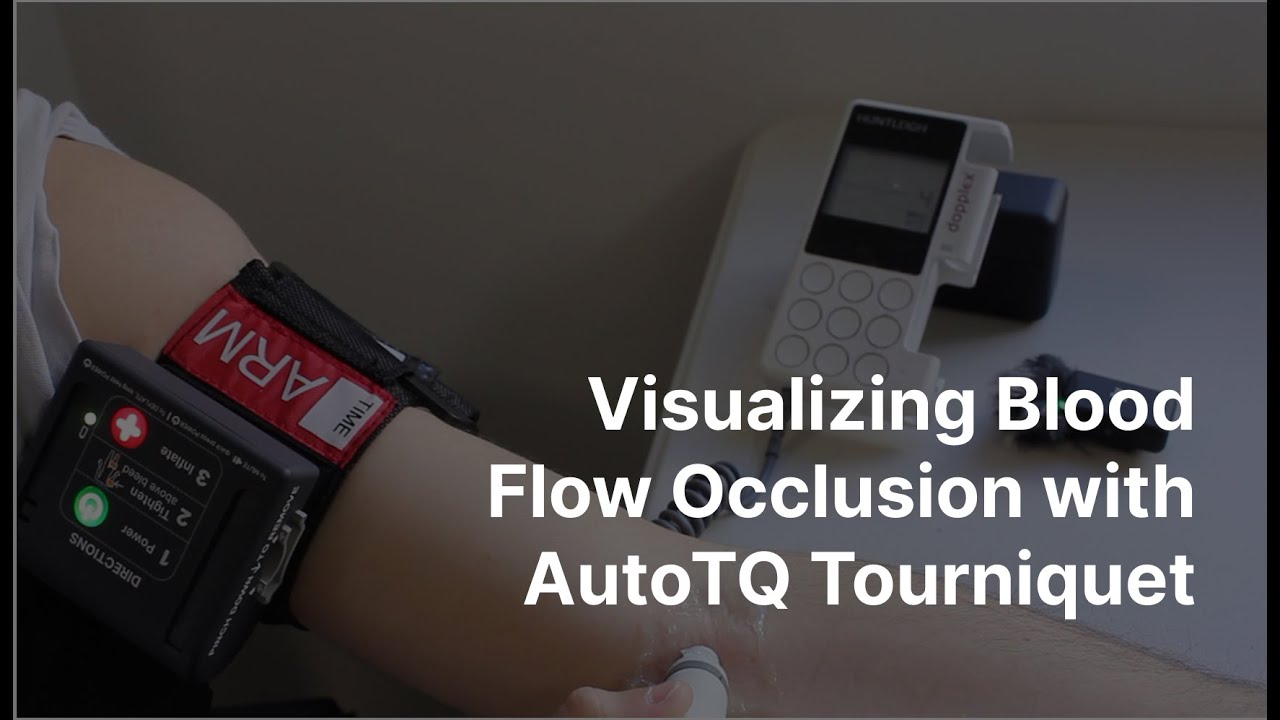
Visualizing Blood Flow Occlusion
Verification via Doppler
Arterial blood flow demonstration using a 4 MHz Doppler probe to confirm temporary vascular occlusion.
Pain vs. Effectiveness
Debunking myths
Why consistent pressure from a wide cuff is critical, and why pain is not a reliable indicator of occlusion.
Safe and Effective Design
Cuff width & pressure
Learn why wider cuffs allow for lower pressure application and a safer experience.
Frequently Asked Questions
-
AutoTQ has a reusable electronics unit that can be cleaned after each use, and a disposable cuff that must be replaced after each use. If you use AutoTQ to save a life, it is our honor to replace your cuff free of charge- just fill out the form at theautotq.com/report.
-
Yes, AutoTQ exceeds the intent of the ANSI/ISEA Z308.1-2021 workplace first aid standard for tourniquets.
ANSI/ISEA Z308.1-2021 recognizes tourniquets as appropriate supplemental equipment for controlling life-threatening extremity bleeding in workplaces with foreseeable severe injury risks.
While the standard does not mandate a specific tourniquet design, commonly accepted criteria referenced by manufacturers include a minimum width of 1.5 inches and the ability to occlude blood flow across a wide range of adult limb circumferences within a reasonable time frame.
AutoTQ exceeds these expectations with a 3-inch arm cuff, a nearly 4-inch leg cuff, and automated pressure-controlled inflation that achieves arterial occlusion on adult arms and legs in under 60 seconds.
Common misconception: ANSI/ISEA Z308.1-2021 does not require a windlass mechanism. While windlass tourniquets are cited as examples of devices that can meet hemorrhage control needs, the standard does not exclude pneumatic or automated tourniquets that are demonstrably effective.
-
AutoTQ is equipped with convenient USB-C charging. Upon receiving your AutoTQ, charge the device for at least 3.5 hours until your indicator light is solid green. If you participate in our Wi-Fi Monitoring Program, we will send you monthly battery updates, and notify you when it is time to charge your AutoTQ. If you opt out of the Monitoring Program, we recommend manually checking your AutoTQ monthly to ensure the light is solid green, just like an AED.
-
Once every two years in optimal storage conditions. Check the battery level monthly and store in accordance with product labeling at theautotq.com/labeling.
-
AutoTQ may offer advantages such as ease of use, faster application, and lower risk of user error compared to a windlass tourniquet. Windlass tourniquets have failure rates over 80% for trained users. AutoTQ solves this problem by simplifying tourniquet application to just one button push.
-
AutoTQ automatically conducts daily maintenance checks. AutoTQ must be checked monthly, but can be automatically checked by participating in our Wi-Fi Monitoring Program. This automatically alerts the user when it is time to plug in your battery. Every five years, we will manually replace your battery as part of our maintenance program.
The inflatable cuff must be disposed of after use and replaced, but it is our honor to replace it free of charge if you use it. Just Report a Life Saved at theautotq.com/report.
-
AutoTQ designed to be adjustable and adaptable to various limb sizes, allowing for effective use in different situations. Multiple cuffs are available for small and large sized limbs.
-
AutoTQ is equipped with interactive training and live instructions that walk the user through the process of tightening to stop a bleed. AutoTQ automatically pressurizes to control bleeding. If the pressure is not adequate, the user can easily increase pressure by pressing “inflate” again.
-
AutoTQ is now available for pre-order! Visit theautotq.com/shop to order now. Fill out the form at the bottom of the shop page to inquire about special pricing for your organization.
-
Having user-friendly tourniquets accessible is crucial because it can effectively control severe bleeding and potentially save lives.
-
It is important to follow instructions and guidelines to minimize any potential risks or side effects from tourniquet use, and to obtain medical help as quickly as possible after application.
Intellectual Property
Patents
AutoTQ is Protected Under U.S. Patent No. 12,070,229 B1. AutoTQ is U.S. Utility Patent Pending.
Trademarks
AutoTQ and Golden Hour Medical are Registered Trademarks with the USPTO.
Extended Clinical Context
Outside Research Library
In addition to our Doppler-verified performance studies, we maintain a comprehensive database of independent research covering tourniquet physiology, hemorrhage control, and real-world trauma data.
Explore Research Library